The skill of writing scientific papers plays a vital role in helping students develop critical, logical, and structured thinking abilities. However, the 2022 Programme for International Student Assessment (PISA) results indicate that Indonesian students’ scientific literacy remains low, with only 34% achieving Level 2 or above. This situation is consistent with studies conducted in several schools, including those in South Tangerang, which show that students are generally more drawn to using gadgets than participating in scientific discussions. Moreover, challenges in writing scientific papers arise from both internal and external factors—internally, students often struggle to generate research ideas and tend to copy from online sources— externally, teachers’ limited use of varied teaching methods and restricted class time further hinder their progress.
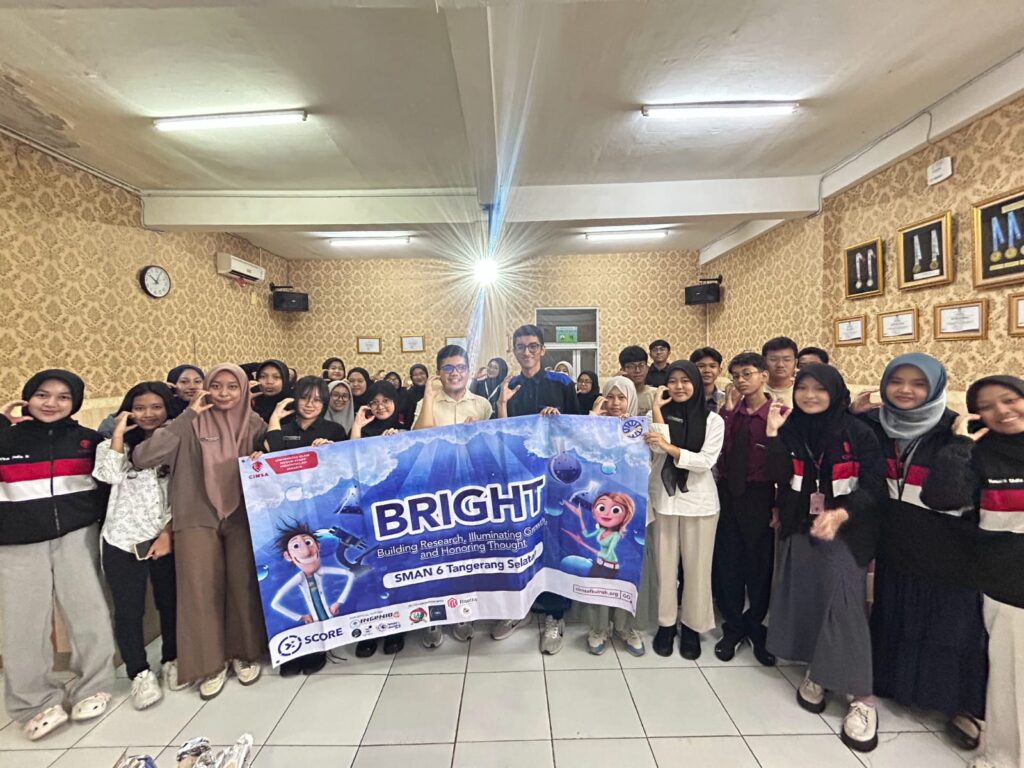
To deal with these issues, SCORE CIMSA FK UIN SH organized a community development program called “BRIGHT” as a platform for our target participants—members of the Scientific Youth Group (KIR) from State Senior High School 6 South Tangerang—to facilitate, affirm, and provide opportunities for students who are interested in doing research. This includes learning how to conduct experiments and understand the essentials of writing scientific papers, namely scientific essays and scientific posters.
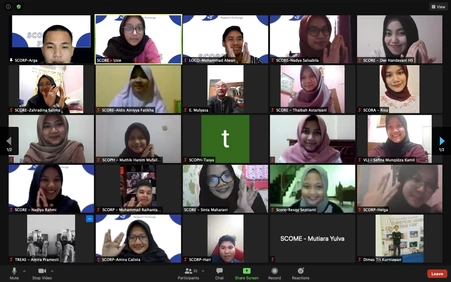
To this extent, we have held a Pre-Intervention on November 3rd, 2025, where we introduced what CIMSA and SCORE are, explained the concept and objectives of “BRIGHT”, announced the participant groups, and also conducted a bonding session to strengthen connections between participants, committees, and facilitators. Then, on November 8th, 2025, we carried out Intervention 1, which consisted of a seminar on “Systematics and Writing of Scientific Essays” presented by an expert from Riset.ku, followed by an experimental demonstration about “Soap Bars Made from Used Cooking Oils” guided by an expert from Sekar Cycle. The 1st Intervention concluded with an assignment for all participant groups to write scientific essays containing their own test data and analysis from the soap experiment they performed.
The participants showed enthusiasm, joy, and active engagement throughout the entire event. We wish that through BRIGHT, all participants will continue to apply their knowledge of scientific essays and experiments in their real lives over the long term and share it within their own communities as well as with others. We also hope that this will raise awareness among all participants about the importance of preserving our environment from waste that can easily cause pollution, even without us realizing it.