Every child is born with unique potential and talents, which means their abilities differ from one another. Autism itself is a diverse group of conditions related to brain development. Autism is a developmental disorder that affects brain function, especially in terms of communication, social interaction, and behavior. According to WHO, about 1 in 100 children in the world have autism. Children with autism symptoms often exhibit motor and sensory disorders. To overcome this, therapy can be carried out either in the form of physical or physiotherapy.
Therefore, interventions are necessary to provide parents and teachers with a comprehensive understanding of the importance of enhancing sensory abilities in CWSN to support their growth, development, and potential. Additionally, the introduction of safe, food-grade media will facilitate the implementation of effective strategies. The interventions’ name is HAUS.
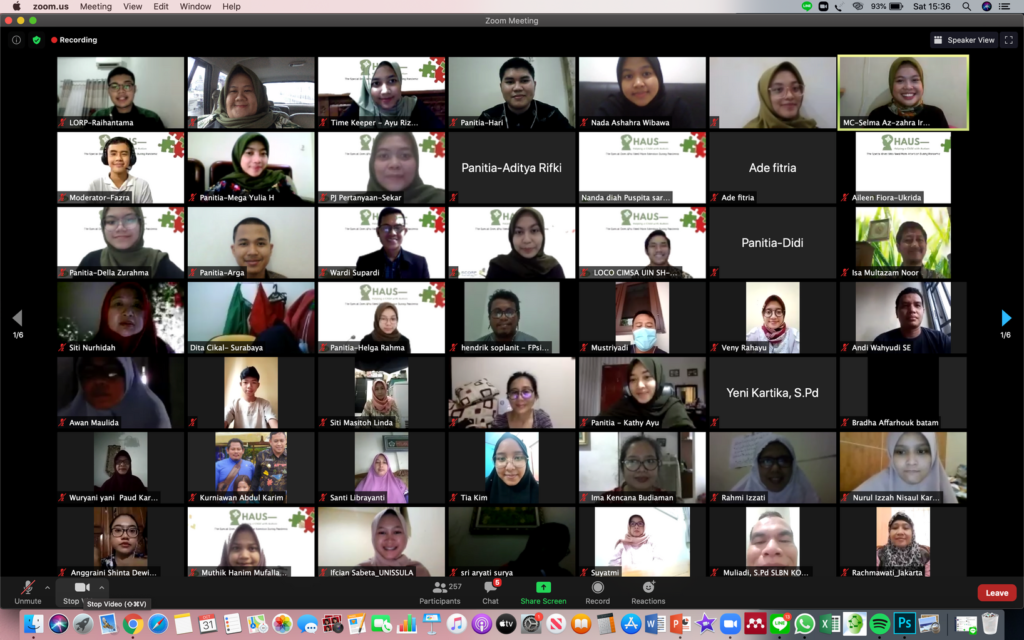
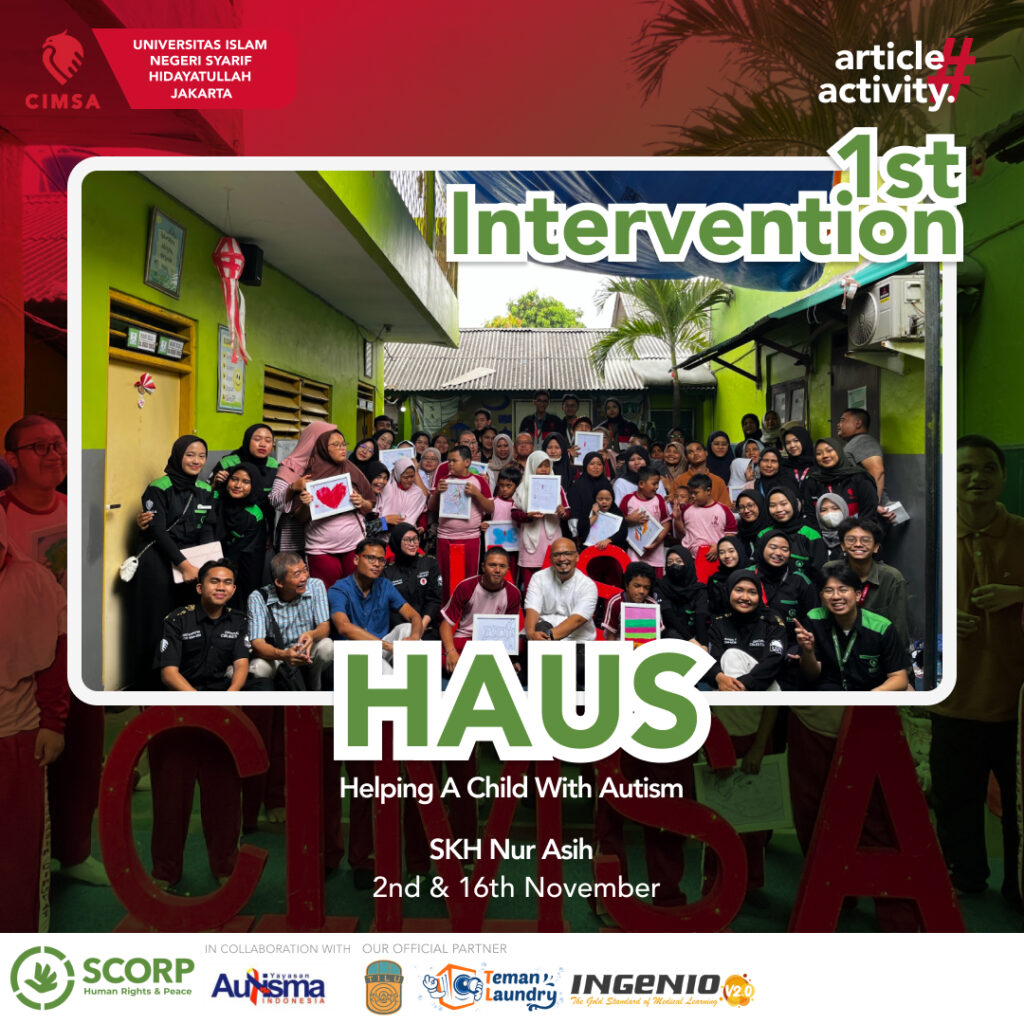
HAUS consists of the main event at 1st intervention consists of seminar and art therapy. Seminar about sensory themed “From the Kitchen to the Playroom: Sensory Play with Food-Grade Materials for Optimal Growth and Development” was delivered by Taufiq Hidayat, an Occupational Therapist, from Yayasan Autisma Indonesia. Not only delivering the seminar, our speaker, Taufiq Hidayat, also conducted a short workshop that explained directly several food items that could be used as sensory play materials for children with autism. HAUS participants were enthusiastic about taking part in this seminar. When parents and teachers attended the seminar, we accompanied the children in doing Art Therapy Activities , such as making bracelets and drawing on picture frames.
Supporting the development of children with special needs (ABK) is essential for fostering inclusivity and maximizing their potential. SCORP CIMSA FK UIN SH’s seminar highlighted the importance of sensory optimization and creative engagement as effective approaches to build awareness and break down societal stigmas around ABK. Through collaboration and ongoing efforts, we can create a more understanding and supportive environment that enables every child to thrive and contribute to a brighter, more inclusive future for Indonesia.
By conducting this community development initiative, it is anticipated that Children with Special Needs (ABK) in selected Special Education Schools (SKH) will be empowered to explore their potential within a supportive environment, particularly from parents or family members. Through the planned activities, parents and families of ABK can recognize the significance of effective communication in creating a safe and nurturing space for ABK to develop their abilities, thereby fostering self-confidence and reducing dependence on others.